
Think You Don’t Walk Near Livestock? Think Again. The New Law You Need to Know

People assume livestock laws don’t apply to them. After all, when you’re walking in places like Pinner, Harrow or Northwood, you’re not picturing open farmland or sheep grazing in fields. You’re thinking of your usual routes - local woods, familiar paths, the same loop you’ve done dozens of times before.
And on the surface, that makes sense. These walks feel predictable. Safe. Controlled. But the reality is, many of these same spaces are shared environments, and that’s where the risk comes in.
But here’s the bit people don’t always realise…
Areas like Ruislip Woods, Bayhurst Woods, Mad Bess Woods, Bishops Woods and Oxhey Woods are incredibly popular for dog walking locally. They offer space, variety, and a break from busy roads. But they also include bridle paths and grazing areas, meaning regular horse traffic, potential exposure to cattle and, legally, livestock.
So while it might not look like the countryside, the law still applies.
And under the new 2026 law, even a “friendly” dog approaching the wrong animal can quickly turn into a serious situation.

What’s changed with the new law?
As of March 2026, updated legislation around livestock worrying has come into force across the UK. While the core principle remains the same, dogs must not harm or disturb livestock, the scope and enforcement of the law have changed significantly.
The most notable change is the removal of the previous £1,000 fine cap, meaning penalties can now be unlimited depending on the severity of the incident. Police also have greater powers, including the ability to seize dogs involved in livestock worrying, and investigations may now involve DNA evidence.
Crucially, the law no longer applies only to fields. It now extends to public spaces such as footpaths, roads and bridleways, which is what makes it so relevant to everyday dog walks in areas like Pinner, Northwood, Harrow and Ruislip not just our holidays to the countryside.

What counts as livestock?
When people hear the term “livestock”, sheep are usually the first thing that comes to mind. In reality, the definition is much broader.
It includes animals such as cattle, pigs, goats, llamas, alpacas, donkeys, mules, deer, as well as poultry. Importantly for local dog walkers, it also includes horses, even when they are being ridden on bridle paths.
This is where many people are caught off guard. Passing a horse on a woodland path might feel like a normal part of a walk, but legally, your dog’s behaviour in that moment matters just as much as it would in a field of sheep.

What is considered “livestock worrying”?
One of the biggest misconceptions is that a dog must attack or bite to be considered a problem.
In reality, the threshold is much lower.
A dog can be considered to be worrying livestock if it chases, runs towards, barks at, or otherwise causes distress to an animal. Even without physical contact, the consequences can be serious. Horses may spook, livestock may panic, and injuries can occur as a result of fear alone.
This is often where the well-meaning “he’s friendly” moment becomes an issue. A dog running over out of curiosity or excitement may seem harmless, but from the animal’s perspective, it can be anything but.
And all it takes is one moment, one dog getting too close, one horse reacting unexpectedly, for a situation to escalate very quickly.

Why this matters locally
For those walking dogs in Pinner, Northwood, Harrow and Ruislip, this isn’t a rare or unlikely scenario.
Shared-use spaces are common. Bridle paths run through many of our local woods. Horses can appear around corners or move through areas you wouldn’t necessarily expect.
As dog walkers, we see this regularly.
It’s not that owners don’t care - it’s that many simply haven’t been made aware of how these environments are classified, or how the law applies within them.
How to reduce the risk
The aim here isn’t to restrict dogs unnecessarily, but to manage situations appropriately.
If there is any possibility of livestock or horses nearby, keeping your dog on a lead is the safest option. Relying solely on recall, even with a well-trained dog, can leave room for error in high-distraction environments.
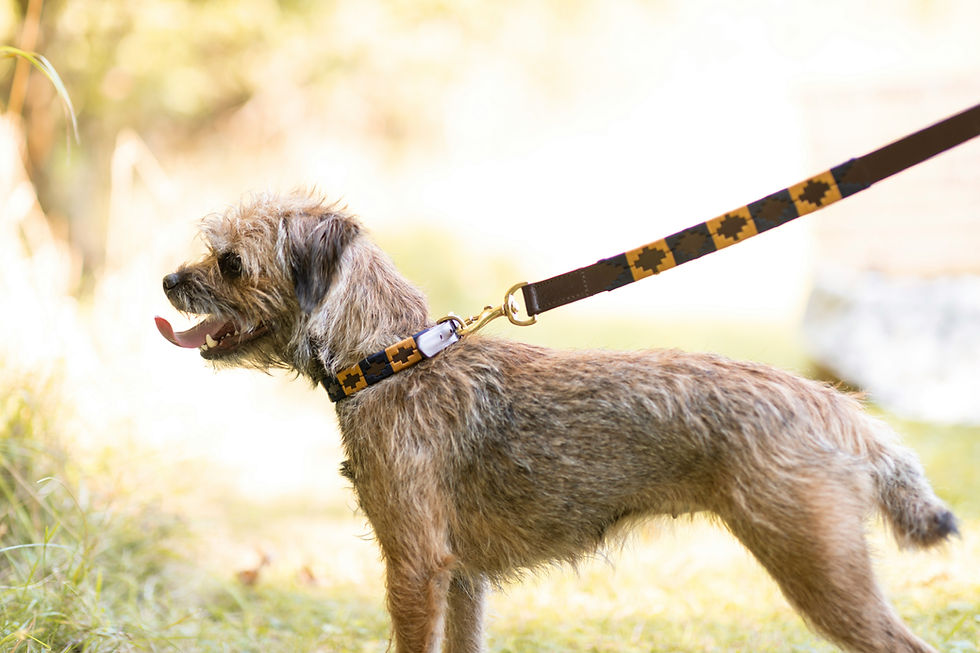
For dogs that are still learning, long lines can be a useful middle ground. They allow freedom of movement while maintaining control, reducing the risk of unwanted approaches.
Equally important is awareness. Recognising signage, understanding where bridle paths run, and creating space early when encountering horses can make a significant difference.
A professional perspective
As a professional dog walking and training service based in Pinner, this is something we factor into our walks every day.
We work across Pinner, Northwood, Harrow, Eastcote and Ruislip, and regularly navigate environments where dogs, people and horses share the same space.
Our focus isn’t not just on exercise, but on developing dogs that can move calmly and neutrally through real-world situations. That means structured group walks, appropriate use of long lines where needed, and careful management of environments.
Because ultimately, safety isn’t just about avoiding worst-case scenarios - it’s about preventing them altogether.
Final thoughts
The key takeaway is simple.
These laws don’t just apply to rural settings or farmland. They apply to everyday dog walks, including the ones many people consider routine.
If you walk your dog in Pinner, Harrow, Northwood or Ruislip, it’s worth taking a moment to consider how these changes affect you.
Because when it comes to livestock, control matters far more than intent.

Looking for a professional dog walker in Pinner, Harrow or Northwood?
If you’d like support with:
Building reliable recall
Improving lead walking
Helping your dog stay calm around distractions
Or joining structured, well-managed group walks
We’re here to help.
👉 Head to www.carlenscaninesandcompanions.co.uk to enquire.
Comments